
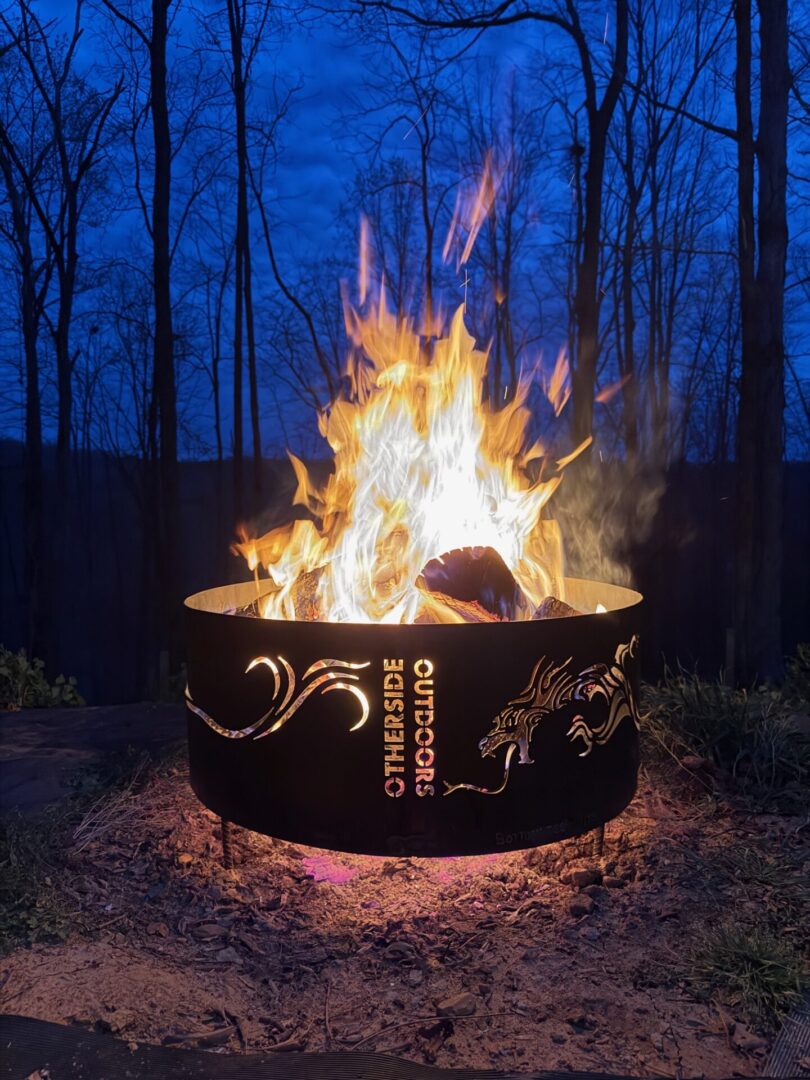
Exactly what is a Bottomless Pit?
Contrary to popular belief, a blazing fire doesn't produce smoke—smoldering does. Smoke is the byproduct of incomplete combustion, which occurs when moisture or a lack of oxygen chokes the fire. When firewood is burned properly, it produces virtually no smoke.
The Bottomless Pit fire pit utilizes natural convection to elevate the traditional campfire experience. Specifically engineered to achieve complete combustion; it significantly enhances the efficiency and heat of your fire.
Our unique open-bottom design allows ash and char (bedicles) to drop freely through the ring, keeping the fire's core clear and giving the flames constant access to fresh, dry fuel. As the heat intensifies, it accelerates airflow through the unit, creating a powerful, self-sustaining draft.
However, the Bottomless Pit is every-bit-as-much a Process as it is a product created for the purpose. To achieve a completely smokeless experience, every outdoor enthusiast should follow three basic rules of operation:
- Use Seasoned, Dry Firewood
The use of seasoned, dry firewood is paramount. Just like a traditional campfire, start your fire slowly and add fuel as the flames allow. The pit will produce some smoke initially until a self-sustaining fire is established in the center of the ring.
- Cover Three-Quarters of the Ring
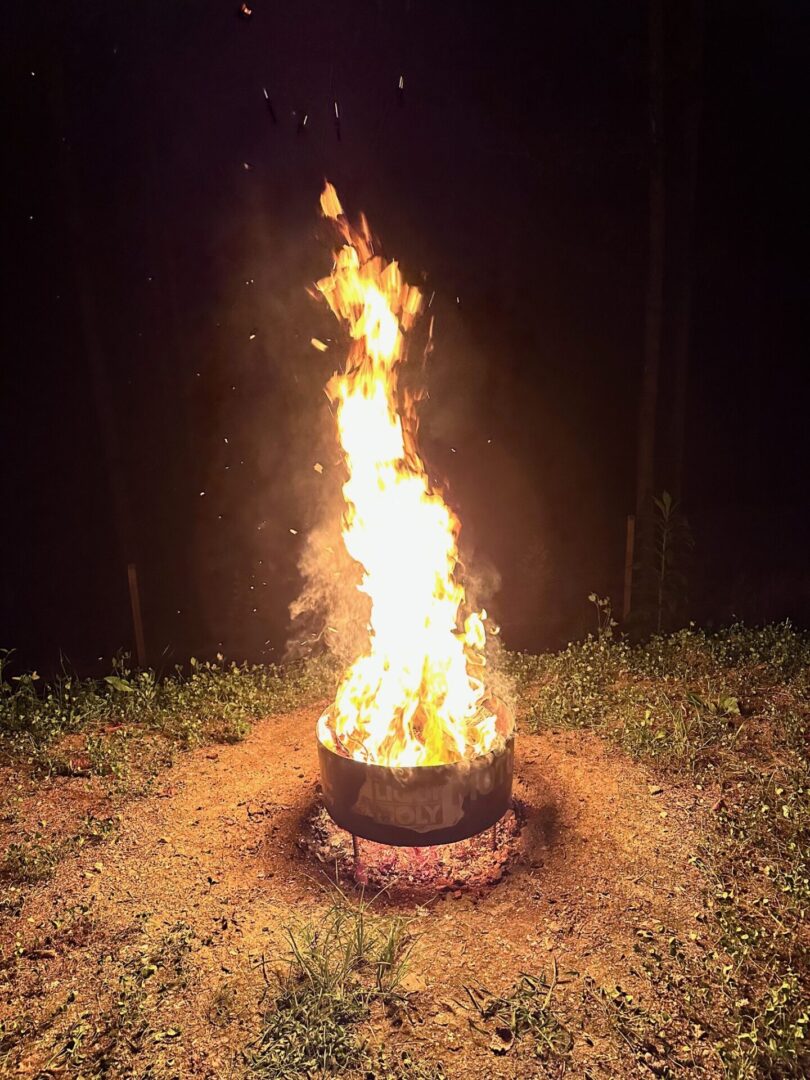
Continue adding fuel until roughly 75% of the ring’s diameter is covered. At this point, the pit will begin to draw air like a furnace. Once the ground beneath the entire circumference is glowing hot-orange embers (bedicles), the fire has reached peak efficiency and will become virtually smokeless.
- Add Fresh Fuel Forcefully
Once the fire is at full throttle, any additional logs should be added with some force. Dropping new logs from about chest height works perfectly; this impact knocks loose the top layer of ash, exposing the glowing coals (bedicles) beneath and instantly invigorating the fire. Because this technique sends sparks and embers airborne, always stay alert and warn bystanders before stoking.
The Options:
The Origin Story
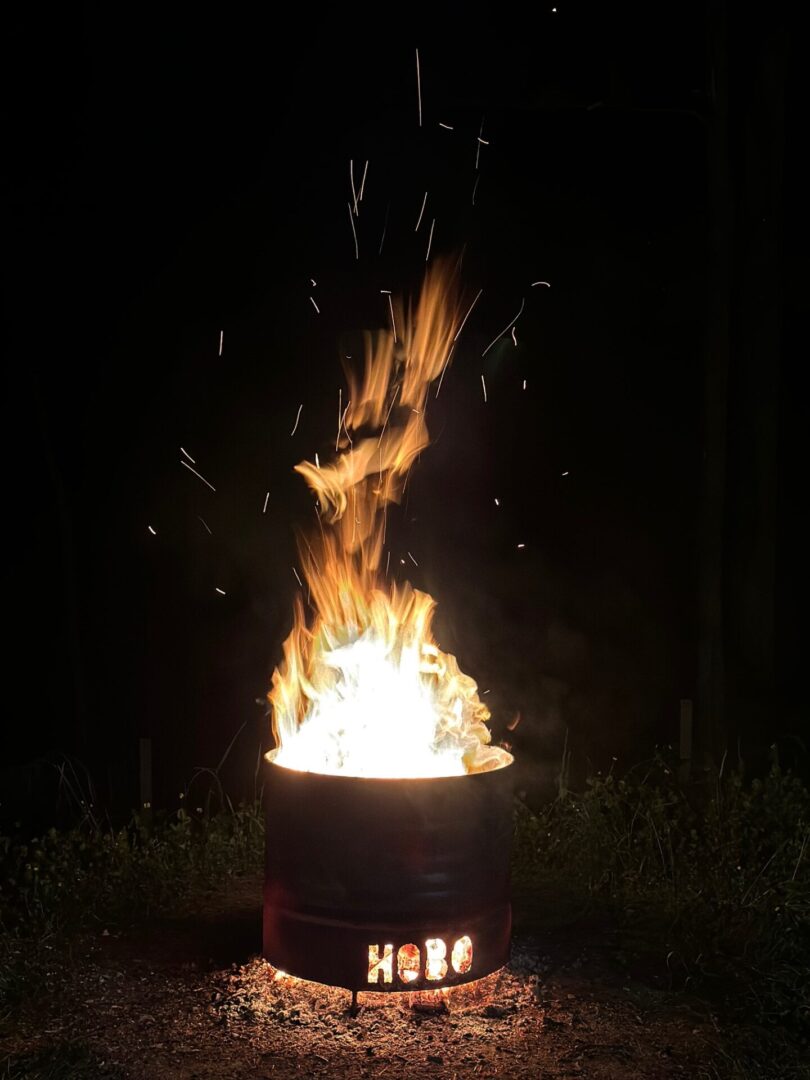
The High Output Bedicle Oven (HOBO) Stove is the DNA behind every Bottomless™ brand firepit. Originally developed as a companion firebox for the West Tennessee whole-hog, Bar-B-Q process, it was engineered to manufacture "bedicles" (multiples of beds of coals) quickly and efficiently.
Bedicle(s)
The term Bedicle is an amalgamation of the phrase ‘bed of coals” and the word “icicle”. The comparison to ice is germane because they share almost exactly the same physical characteristics…. only, in reverse.
Essentially, all species of wood breaks down similarly under combustion. As fuel and oxygen are consumed by the flames, a semi-geometric gridwork of charred carbon is formed. This formation does not necessarily coincide with any of the other structural features of the lumber. It does not follow the growth rings, natural grain patterns, nor pre-existing fault lines. It is not visible in any capacity other than during combustion. The roughly ½” to ¾” gridwork of cubes will begin to form on the log after being subjected to open flames for 15- 20 minutes. As the log continues to burn, the outer layer of cubes (bedicles) will fall free and the next layer will form.
The manufacture of bedicles is not unlike an ice maker making ice, only 100% the opposite. Like ice, bedicles have their own unique sound. They pop, and squeak, and whistle like a frozen lake in winter. There is even a distinctive rumble whenever a new batch drops free from the hopper. Once removed from the flames you’re left with a pile of glowing hot orange bedicles, ready for distribution.
Ready to buy a Bottomless Pit?
Reach out to purchase your own custom pit, ask questions about our metalwork, or confirm specific sizing and graphic options for your build.